JillLebofsky may earn a commission if you buy through links on this page, at no extra cost to you. That does not change what we report.
Part of our Tupitea overview. Last checked October 28, 2026.
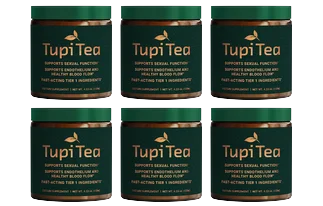
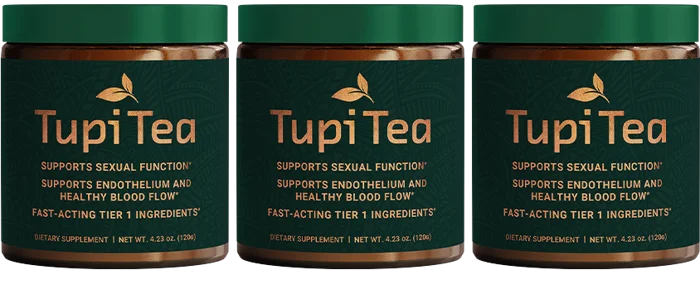
Tupi tea ingredients are not published by the vendor: tupitea.com has no Supplement Facts panel, no ingredient list and no label image (checked October 28, 2026).[1] The jar shows one number, Net Wt. 4.23 oz (120 g).[2]
Eight ingredient names appear on a third-party sales page, with no amounts. The vendor has not confirmed any of them, so this page presents them as reported, not known.
Tupitea ingredients at a glance
No ingredient on this list is confirmed by the vendor, and no amount is disclosed for any of them. The table shows each reported name, the use researchers have studied, and how strong the human evidence is in our sources.
| Reported ingredient | Use studied or claimed | Amount disclosed? | Evidence grade |
|---|---|---|---|
| Horny goat weed (Epimedium) | Erections (traditional) | No | Very weak: animal data only |
| Tribulus terrestris | Erections, libido, testosterone | No | Limited at 750 to 1,500 mg standardized; no effect on testosterone |
| Muira puama | Libido (traditional) | No | Weak: no placebo trial alone |
| Damiana | Libido (traditional) | No | Weak: combination products only |
| Ginkgo biloba | Memory, eyes | No | No sexual-function data in our sources |
| Oat straw | Folk aphrodisiac | No | Weak: no human sexual-function trial |
| Niacin (vitamin B3) | Erections at drug doses | No | Weak at 1,500 mg; none at supplement doses |
| Vitamin E | Eyes (as part of a formula) | No | No sexual-function data in our sources |
What is in each ingredient, and what does research say?
None of the research below tested Tupitea. Doses studied are listed so you can compare them with the jar panel.
Horny goat weed (Epimedium)
Horny goat weed (Epimedium) is an herb often standardized to a compound called icariin. Erection studies were done in rats, and published summaries call human proof lacking.[3] Gut bacteria break icariin down heavily, so lab doses do not carry over to people.[4] The only solid human trial is for bone density in 100 women after menopause.[5] Grade: very weak.
Tribulus terrestris
Tribulus is a plant fruit extract with the most human data on this list. A meta-analysis of 8 trials found a 3.23-point gain on the IIEF-5 erection questionnaire versus placebo, with side effects no different from placebo.[6] A 180-man trial of standardized extract at 1,500 mg a day helped (maker staff co-authored it), while a 30-man trial at 800 mg a day found no benefit.[7][8] A 52-study analysis found most testosterone boosters, tribulus included, fail to raise total testosterone.[9] Grade: limited when standardized, weak when the extract type is unknown.
Muira puama
Muira puama is an Amazon root listed among traditional male sexual enhancers. No placebo-controlled trial of it alone exists in our sources. An open-label study of 202 women taking it with ginkgo for one month reported higher libido scores in 65%, with no placebo group.[10] Grade: weak.
Damiana
Damiana (Turnera diffusa) is a leaf with traditional use as an aphrodisiac, and the evidence is mostly animal and lab work. It has been tested only inside multi-ingredient products. In one 77-woman trial of such a blend, 73.5% reported better sex-life satisfaction versus 37.2% on placebo, but the effect cannot be pinned on damiana.[11] Grade: weak.
Ginkgo biloba
Ginkgo leaf extract is mostly studied for memory and eyes. In the GEM trial, 3,069 older adults took 120 mg twice daily for a median of about 6 years with no drop in dementia.[12] NCCIH notes it may raise bleeding risk with blood thinners.[13] Our sources hold no sexual-function trial for it.
Oat straw
Oat straw (green oat herb, Avena sativa) is listed among folk aphrodisiacs without human trial data.[14] Trials of branded green oat extracts at 430 to 1,600 mg a day looked at thinking: in a 6-trial analysis of 287 adults, single doses may speed up mental tasks while long-term use did not.[15] None measured sexual outcomes. Grade: weak.
Niacin (vitamin B3)
Niacin is a B vitamin. One trial gave 160 men with erection problems and high cholesterol up to 1,500 mg a day for 12 weeks; overall results did not clearly beat placebo, and only men with moderate or severe problems improved.[16] The NIH upper limit from supplements is 35 mg a day.[17] Grade: none at supplement doses.
Vitamin E
Vitamin E is a fat-soluble vitamin. In a 9-trial analysis of 118,765 people, it raised bleeding-type stroke risk by 22%.[18] The SELECT trial linked 400 IU a day to more prostate cancer in healthy men.[19] Our sources hold no sexual-function trial for it.
How transparent is the Tupitea formula?
Not transparent: the vendor discloses the total jar weight and nothing else. With 120 g per jar and no serving size, there is no way to work out a daily amount, and with no per-ingredient figures, nothing can be compared to the 750 to 1,500 mg tribulus doses or the 35 mg niacin limit above.
When a label and a third-party list disagree, the label on the jar you hold wins. The third-party page already conflicts with the vendor twice: it says capsules where the vendor shows a jar, and it shows a 60-day guarantee where the vendor promises 90 days.[2] We checked tupitea.com on October 28, 2026; its /ingredients and /supplement-facts addresses only load the home page.[1]
Ingredient safety and interactions
The main safety risk is not knowing what is inside. Sexual-enhancement supplements are the category where FDA most often finds hidden drug ingredients, and we could not load FDA's tainted products list, so it was NOT checked.
Among the reported names, ginkgo and vitamin E can raise bleeding risk with blood thinners, niacin causes flushing above about 30 to 50 mg, and horny goat weed may add to nitrates and blood pressure medicine. Tribulus has case reports of liver and kidney injury. Anyone on heart medicine, nitrates or blood pressure medicine should ask a doctor first. Details are on our Tupitea side effects page.
Do these ingredients prove Tupitea works?
No. Research on single herbs cannot prove a product works when its amounts are unknown and the vendor has not confirmed the names. Only tribulus shows a measurable human effect, at standardized doses nobody can confirm here.[6]
Our Tupitea overview covers what the vendor claims and what we could verify, and how to take Tupitea explains why no dose can be given. If you buy, read the panel before your first serving.
Back to the Tupitea overview.
Frequently asked questions
What are the ingredients in Tupi Tea?
The vendor does not say. Tupitea.com has no ingredient list or Supplement Facts panel (checked October 28, 2026). A third-party page names horny goat weed, tribulus, muira puama, damiana, ginkgo, oat straw, niacin and vitamin E, but the vendor has not confirmed them.
How much tribulus is in Tupi Tea?
Unknown. No amount is published for any ingredient, and tribulus itself is only reported on a third-party page. Trials that found an effect on erection scores used standardized extract at 750 to 1,500 mg a day, so ask the vendor for the figure.
Is Tupi Tea a tea, a powder or capsules?
The vendor shows a jar with a net weight of 4.23 oz (120 g), which suggests a powder or tea, but the form is not stated. One third-party page calls it capsules, which conflicts with the vendor. Check the jar you receive.
Does Tupi Tea contain caffeine?
Nobody outside the company can say. The vendor publishes no ingredient list, and none of the eight names reported elsewhere is a caffeine source. Ask support at support@tupitea.com and read the panel on the jar before your first serving.
Where can I find the Tupi Tea Supplement Facts label?
Only on the jar, if it carries one. The vendor site has no label image, and its /ingredients and /supplement-facts addresses load the home page instead (checked October 28, 2026). You can ask support for the panel before ordering.
Sources
- Tupi Tea, Natural Male Vitality Supplement (vendor home page). Pristine Health Research, read October 28, 2026.
- Tupitea order page (packages, guarantee, jar label). Pristine Health Research, read October 28, 2026.
- Epimedium (horny goat weed) and erectile function: evidence summary (PMID 35958901). PubMed, National Library of Medicine, read October 19, 2026.
- Gut bacterial metabolism of icariin (PMID 27589718). PubMed, National Library of Medicine, read October 19, 2026.
- Epimedium flavonoids and bone density in postmenopausal women, 24-month trial (PMID 17419678). PubMed, National Library of Medicine, read October 19, 2026.
- Tribulus terrestris for erectile dysfunction: meta-analysis of 8 randomized trials (PMID 40360723). PubMed, National Library of Medicine, read October 20, 2026.
- Standardized Tribulus extract in men with mild or moderate erectile dysfunction, 12-week trial (PMID 28364864). PubMed, National Library of Medicine, read October 20, 2026.
- Tribulus terrestris 800 mg a day for erectile dysfunction, 30-day trial (PMID 24630840). PubMed, National Library of Medicine, read October 20, 2026.
- Testosterone booster supplements: systematic analysis of 52 studies (PMID 37697053). PubMed, National Library of Medicine, read October 20, 2026.
- Muira puama and ginkgo in women with low libido, open-label study (PMID 11186145). PubMed, National Library of Medicine, read October 20, 2026.
- Multi-ingredient blend with damiana in women, randomized trial (PMID 11554217). PubMed, National Library of Medicine, read October 20, 2026.
- Ginkgo Evaluation of Memory (GEM) trial (PMID 19017911). PubMed, National Library of Medicine, read October 19, 2026.
- Ginkgo. National Center for Complementary and Integrative Health (NCCIH), read October 19, 2026.
- Traditional aphrodisiac plants, including Avena sativa (PMID 21485695). PubMed, National Library of Medicine, read October 28, 2026.
- Green oat extract and cognition: systematic analysis of 6 trials (PMID 36657906). PubMed, National Library of Medicine, read October 28, 2026.
- Niacin and erectile function in men with high cholesterol, randomized trial (PMID 21810191). PubMed, National Library of Medicine, read October 19, 2026.
- Niacin: Fact Sheet for Health Professionals. NIH Office of Dietary Supplements, read October 19, 2026.
- Vitamin E and stroke risk: meta-analysis of 9 randomized trials (PMID 21051774). PubMed, National Library of Medicine, read October 19, 2026.
- Vitamin E and prostate cancer risk: the SELECT trial (PMID 21990298). PubMed, National Library of Medicine, read October 19, 2026.
This page is general information, not medical advice. Dietary supplements are not reviewed by the FDA for safety or effectiveness before they are sold and are not intended to diagnose, treat, cure or prevent any disease. Talk to your doctor before taking any supplement, especially if you are pregnant, nursing, take medication or have a health condition.